Discoverability Optimization: The Future of SEO Beyond Websites
Discoverability optimization is the future of SEO. Learn how to get found across AI search, voice, apps, and social platforms -- not just website rankings.
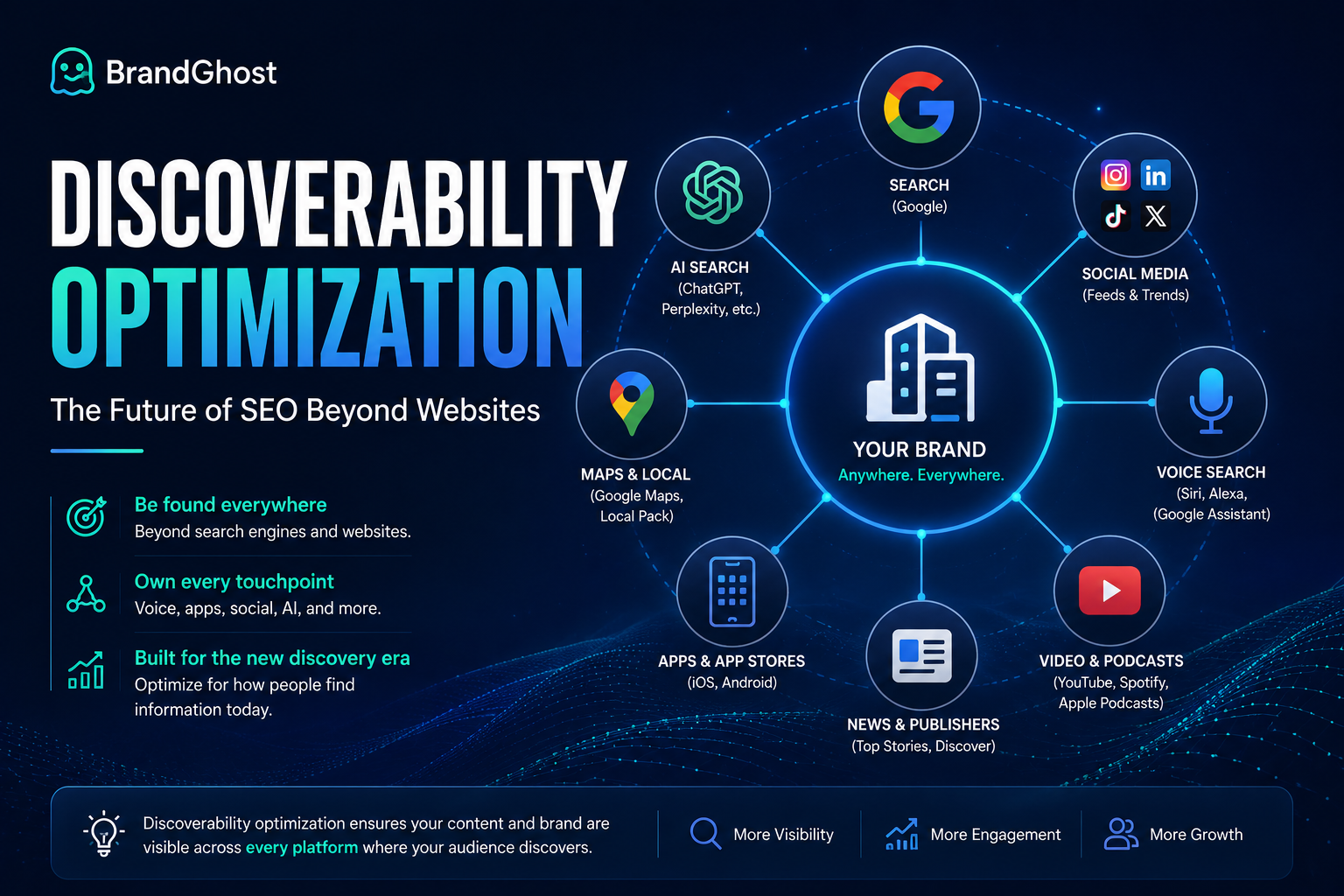
In today’s increasingly digital world, most marketers agree that search engine optimization—often simply called “SEO”—is no longer confined to a website’s content and structure. The shift toward what many in the industry are now calling “discoverability optimization” reflects just how far the landscape has evolved. Unlike traditional SEO, discoverability optimization is about ensuring your digital presence is easily found across a growing network of platforms. Whether it’s your content surfacing in a voice assistant’s results, an app store, a smart device feed, or a social platform’s trends, discoverability is becoming the true measure of influence in today’s connected age.
If you’ve ever wondered why being easily found online now takes on new layers of complexity, you’re not alone. The future of SEO is not just about rising through the ranks of search engines but about adapting to how people interact with technology on a daily basis. More than ever, users are looking for answers in apps, speaking to AI assistants, or letting predictive algorithms suggest content they didn’t even know they needed. For those striving to stay ahead, the focus is expanding from classic keyword targeting to an emphasis on being discovered wherever audiences might look—or even be surprised by what they find.
This evolution is especially important for anyone interested in digital discoverability, content strategy, or understanding the broader trends shaping how information moves in the digital era. It’s not solely for marketers or webmasters; it touches entrepreneurs, casual content creators, and anyone who wants their voice to be heard in a crowded and ever-shifting digital landscape. Exploring the future of SEO reveals why discoverability optimization is poised to reshape not just marketing strategies, but the entire way information is created, shared, and valued.
The Evolution From Traditional SEO to Discoverability Optimization
Most people familiar with digital content have seen the rise—and some limitations—of traditional SEO firsthand. Early SEO strategies focused on stuffing keywords onto web pages, tweaking metadata, and building backlinks, with the main goal of ranking higher on Google or other popular search engines. For years, this web-centric, keyword-first approach shaped the playbook for online visibility. But many marketers have noticed that simply ranking well on a search engine isn’t always enough. The explosion of digital touchpoints, from social apps to voice-driven interfaces, means people now encounter information in countless ways that transcend search engine result pages.
A key reason discoverability optimization has moved to center stage is that digital journeys rarely begin and end with a typed query these days. Instead, algorithms surface podcasts in your app, smart speakers answer questions out loud, and even smartwatches cue up news feeds. For those pursuing digital visibility, this means that optimizing only for traditional web search risks missing significant opportunities for connection and engagement on new platforms. Many marketers and content creators find that today’s user journey often meanders through unexpected digital territory, where classic SEO simply doesn’t apply.
In practice, the evolution toward discoverability optimization shifts focus from “how do we rank this web page?” to “how can we become omnipresent across channels where our audiences are spending time?” Even as the fundamentals of quality content and relevance remain crucial, discoverability is now about making content accessible, adaptable, and engaging wherever and however users want to find it. By embracing the wider arena of discoverability, digital creators are not just chasing rankings—they’re future-proofing their presence against the next digital trend that might reinvent how people search and discover information.
Core Principles of Discoverability Optimization
Over time, most digital content professionals have come to realize that what makes something truly discoverable goes far beyond simple keywords. Discoverability optimization requires understanding how different platforms interpret, surface, and recommend content. While metadata and structured data still play a foundational role, it’s the blend of contextual clues, media formats, and signals of user intent that set genuinely discoverable content apart.
For example, it’s common these days for creators to use schema markup to help machines understand not only what a piece of content is about, but also its relevance in context. Rich media elements—such as images, podcasts, or interactive elements—give content more ways to catch attention, especially on channels where text isn’t the primary medium. The nuances of semantic search and the signals users provide through their interactions are increasingly important. Many people find that modern discoverability hinges on anticipating not just what users ask, but what they actually mean or need in a specific moment.
AI-driven advances are accelerating these changes. As artificial intelligence evaluates everything from phrasing to engagement patterns, content must be designed to appeal to algorithms that look for depth, diversity, and intent. The most successful discoverability optimization strategies use a holistic mix: metadata, context, structured data, and signals across platforms, supported by a sharp focus on user experience. The aim is to create adaptable content, ready to be surfaced anywhere the audience happens to be—even if it’s in a speech transcript on a smart speaker or a recommended article in a news app. In this way, the core principles of discoverability optimization are less about chasing a single algorithm, and more about building universally accessible digital footprints.
AI and SEO: Transforming Discoverability Strategies
You’d be hard-pressed these days to talk about discoverability optimization without acknowledging the seismic impact artificial intelligence has on how people find content. Search is no longer just about text input and blue links. AI-driven algorithms now power everything from voice assistants like Siri and Alexa to the recommendation engines behind YouTube and Spotify. These advances mean that people increasingly discover information, media, and products through conversations, suggestions, and contextual answers rather than traditional web search alone.
Key Strategies for Discoverability Optimization
- Optimize content for multiple platforms (web, app, voice, social) to expand audience reach.
- Use schema markup and structured data to make content machine-readable.
- Maintain consistency in branding and messaging across digital channels.
- Leverage rich media formats (video, audio, images) for greater engagement.
- Regularly update and adapt strategies to align with platform changes and user behaviors.
Take, for example, the way AI can parse natural language queries in a voice search. Rather than returning a list of links, a voice assistant offers a direct answer, pulling from a blend of structured data, FAQs, and user behavior. Recommendation systems dig deeper into understanding what users like, surfacing personalized playlists or news feeds, sometimes before anyone even asks for them. In most cases, discoverability optimization now depends on understanding and adapting to these new forms of search and curation. It’s not unusual for digital creators to rethink their entire content strategy based on emerging SEO trends that prioritize AI-readiness—such as making content easily consumable by chatbots or optimizing for generative engines that summarize multiple sources.
The implications for content strategy are profound. Many organizations are learning they need to signal value not only to search engines but also to the increasingly complex (and sometimes opaque) AI models that mediate how content travels online. In this climate, discoverability isn’t just a checkbox—it’s a continuous experiment in anticipating both new technologies and user habits. As artificial intelligence further integrates with search and recommendation, the only constant is change—and proactive adaptation remains key for those hoping to stay visible across the digital landscape.
Discoverability Optimization Across Digital Channels
For anyone invested in boosting their online presence, it becomes quickly apparent that discoverability optimization doesn’t stop at the boundaries of a website. Today’s most successful strategies are often those that consider the unique challenges and opportunities of every major digital channel—from traditional websites to app stores, smart devices, and social platforms. In most cases, each channel comes with its own rules, algorithms, and audience habits, requiring a far more holistic approach than web-only SEO ever demanded.
On the web, discoverability still relies heavily on search engines, but modular content, cross-linking, and strategic metadata help resources surface in knowledge panels and featured snippets. App store optimization is a game unto itself—most creators find that localized keywords, engaging visuals, and regular updates are essential for climbing app rankings. Voice search requires crafting succinct, answer-oriented responses, formatted in a way that digital assistants can easily retrieve and vocalize.
When it comes to social platforms, discoverability is tied as much to timing, virality, and media formats as to any underlying keyword strategy. Short-form video and live content, for example, may trend more quickly on certain platforms, while smart devices prioritize content that is streamlined and contextually relevant. Many digital strategists now advise that viewing digital discoverability as an omnichannel undertaking, rather than a website project, is what positions content for the broadest reach. That means thinking in terms of ecosystems—maximizing each channel’s native strengths while maintaining a unified content identity across platforms. Shifting your mindset from “how do I win on Google?” to “how can I be found everywhere my audience spends time?” is at the heart of modern discoverability optimization.
Content Strategy for the Future of SEO
As digital landscapes evolve, so too must the approaches content creators use to remain visible. It’s becoming common knowledge among forward-thinking strategists that a successful content strategy for discoverability optimization is about more than simply publishing a blog post and hoping for the best. Instead, it’s about shaping modular, adaptable content designed to surface across web, app, social, and voice platforms alike.
One useful approach is to break down content into flexible, reusable blocks—sections, snippets, audio clips, and visuals—that can be reformatted or syndicated for any digital touchpoint. This future-focused approach helps content stand out not only in web search results, but as featured answers on voice assistants or as highlights in social feeds. Many content developers find schema markup especially valuable, allowing search engines and AI-driven platforms to quickly identify, categorize, and feature their material in context-rich environments.
Mobile-first and voice-ready strategies are no longer optional. More often than not, people expect information that loads instantly, is easy to navigate by touch or voice, and offers direct answers without forcing a user to scroll or dig. Those aiming for lasting discoverability are now planning content not just for the next campaign, but for an adaptable, multi-platform lifecycle. Real-world examples abound—from publishers that auto-generate voice versions of articles, to brands that repurpose tips as Instagram reels or app-based push notifications. In most cases, the brands and voices people continue to find are those that make discoverability optimization an ongoing, top-level priority in their content strategy toolkit.
Measuring Success: Metrics for Discoverability Optimization
One lesson that becomes clear as digital platforms multiply is that measuring success in discoverability optimization looks quite different from the old, website-focused metrics of traditional SEO. Years ago, it was enough to watch your page ranking or track organic traffic. But as information is increasingly surfaced by AI-driven assistants, app store searches, social recommendations, and smart devices, the analytics picture grows more complicated—and, some would say, more interesting.
Instead of relying solely on search ranking positions or bounce rates, today’s approach puts greater emphasis on cross-channel impressions and overall engagement. Many marketers and creators now find that meaningful metrics include how often your content or brand is mentioned across various platforms, the number of times content is surfaced in recommendation engines, and engagement in non-search environments—such as voice assistant answers or interactions within mobile apps. For example, tracking your brand’s presence in voice search results or smart device feeds can reveal new opportunities and blind spots that standard web analytics might miss.
Key performance indicators (KPIs) for discoverability optimization usually go beyond old standards. Impressions across platforms, multi-channel engagement rates, and the frequency with which users search for your brand directly are all worth attention. Measuring how often content is “suggested” or “auto-completed” by various AI and search interfaces is increasingly important. Some organizations use specialized analytics dashboards or tools that integrate data from social, mobile, web, and app sources to get a fuller picture of visibility. According to reliable industry overviews, successful discoverability strategies are built on regular evaluation and adaptation, using a blend of quantitative and qualitative feedback. Cross-channel dashboards that consolidate data from social, web, and app sources make this ongoing evaluation far more practical.
Of course, no single tool is likely to capture the entire story—especially as new digital environments emerge. Most experts agree that developing your own approach to cross-channel measurement, including custom dashboards or reporting routines, is a critical part of mastering discoverability optimization. Ultimately, success means being seen, heard, or experienced wherever audiences are searching, interacting, or simply being curious, across as many touchpoints as possible.
Future Outlook: The Expanding Role of Discoverability Optimization
For those keeping a pulse on digital evolution, it’s hard not to notice how rapidly the role of discoverability optimization is expanding beyond the classic boundaries of SEO. Most observers believe that as artificial intelligence becomes smarter—and more integrated into everyday search, recommendations, and content surfacing—the next wave of discoverability will look even less like traditional web-centric SEO and more like a universal visibility toolkit.
In the coming years, it’s widely anticipated that conversational AI interfaces and generative answer engines will redefine how people locate and engage with information. Instead of clicking through pages, audiences may interact with chatbots, voice assistants, or immersive AR/VR environments that surface information in real time. Many experts predict that persistent search—where content follows users across devices and journeys—will become standard, making discoverability optimization a continuous, multi-context challenge rather than a one-time fix. Industry analysts widely emphasize the importance of agility and innovation for creators and organizations aiming to stay visible across evolving technology channels.
For businesses, creators, and general users alike, this shift means prioritizing adaptability is essential. With more platforms adopting AI-driven recommendation systems, discoverability will hinge on the richness of metadata, context-driven optimization, and the readiness of content for non-traditional interfaces. Those able to anticipate these shifts—by investing in machine-readable data, immersive formats, and cross-platform strategies—are likely to enjoy greater visibility and impact. As the digital landscape diversifies, future-minded discoverability optimization will likely blend technical finesse with creative experimentation, making it a central topic for anyone invested in long-term digital presence.
If the trajectory holds, discoverability will be less about chasing algorithms and more about building persistent, adaptable content ecosystems. The ability to “be found” wherever people look, ask, or experience is shaping up to be the defining challenge—and opportunity—of tomorrow’s SEO trends.
Conclusion: Embracing the Future of Discoverability
Looking at the evolving digital landscape, it’s clear that discoverability optimization is more than just a buzzword—it’s a fundamental shift in how content creators, businesses, and everyday users approach online visibility. As search, AI, and user habits evolve, the mindset has to move from chasing web rankings to developing adaptive, omnipresent digital footprints. The journey so far has shown that relying solely on traditional SEO is no longer enough, and embracing a broader, more creative approach is the best way to meet audiences wherever they may be.
Most who invest time in digital content quickly see the importance of staying agile in the face of emerging technologies. Discoverability optimization asks creators not just to respond to user behavior, but to anticipate it—crafting content that plays well with AI, new platforms, and environments not yet imagined. For any creator or leader hoping to sustain digital impact, proactively learning, updating practices, and experimenting with cross-channel strategies tend to be the strongest foundations.
To deepen your understanding or stay ahead of SEO trends and digital discoverability, consider exploring resources from trusted sources such as the Content Marketing Institute, Moz, or reading about the latest AI and SEO innovations. The journey toward discoverability optimization is ongoing—and for many creators, it’s one of the most exciting opportunities the digital age has to offer.
Frequently Asked Questions
What is discoverability optimization?
Discoverability optimization is the practice of making your content and brand easy to find across many digital channels -- web search, voice assistants, app stores, social platforms, smart devices, and AI-driven recommendation engines -- rather than optimizing only for a website's ranking on a single search engine.
How is discoverability optimization different from traditional SEO?
Traditional SEO focuses on ranking web pages for keywords on search engines. Discoverability optimization expands that goal to every place audiences encounter content, including voice search, social feeds, and generative answer engines. It relies more heavily on structured data, context, rich media, and consistency across platforms than on keywords alone.
Why does discoverability matter beyond websites?
People rarely begin and end a digital journey with a typed query anymore. They ask voice assistants, scroll social feeds, browse app stores, and let recommendation algorithms surface content. Optimizing only for web search misses the many other touchpoints where audiences now discover information and brands.
What role does AI play in discoverability optimization?
AI powers voice assistants, recommendation engines, and generative answer experiences that increasingly mediate how content is found. These systems reward content that is machine-readable, well-structured, and contextually relevant, which makes structured data and clear, consistent signals central to discoverability optimization.
How do you measure discoverability?
Discoverability is measured across channels rather than by a single ranking. Useful signals include cross-platform impressions, multi-channel engagement, brand mentions, how often content is surfaced by recommendation engines, and the frequency of direct brand searches. Custom dashboards that combine web, social, app, and voice data give the fullest picture.