From SEO to Discoverability: Reframing Your Marketing Strategy
Moving from SEO to discoverability reframes your marketing. Learn to be discoverable across social, voice, and AI search -- not just searchable on Google.
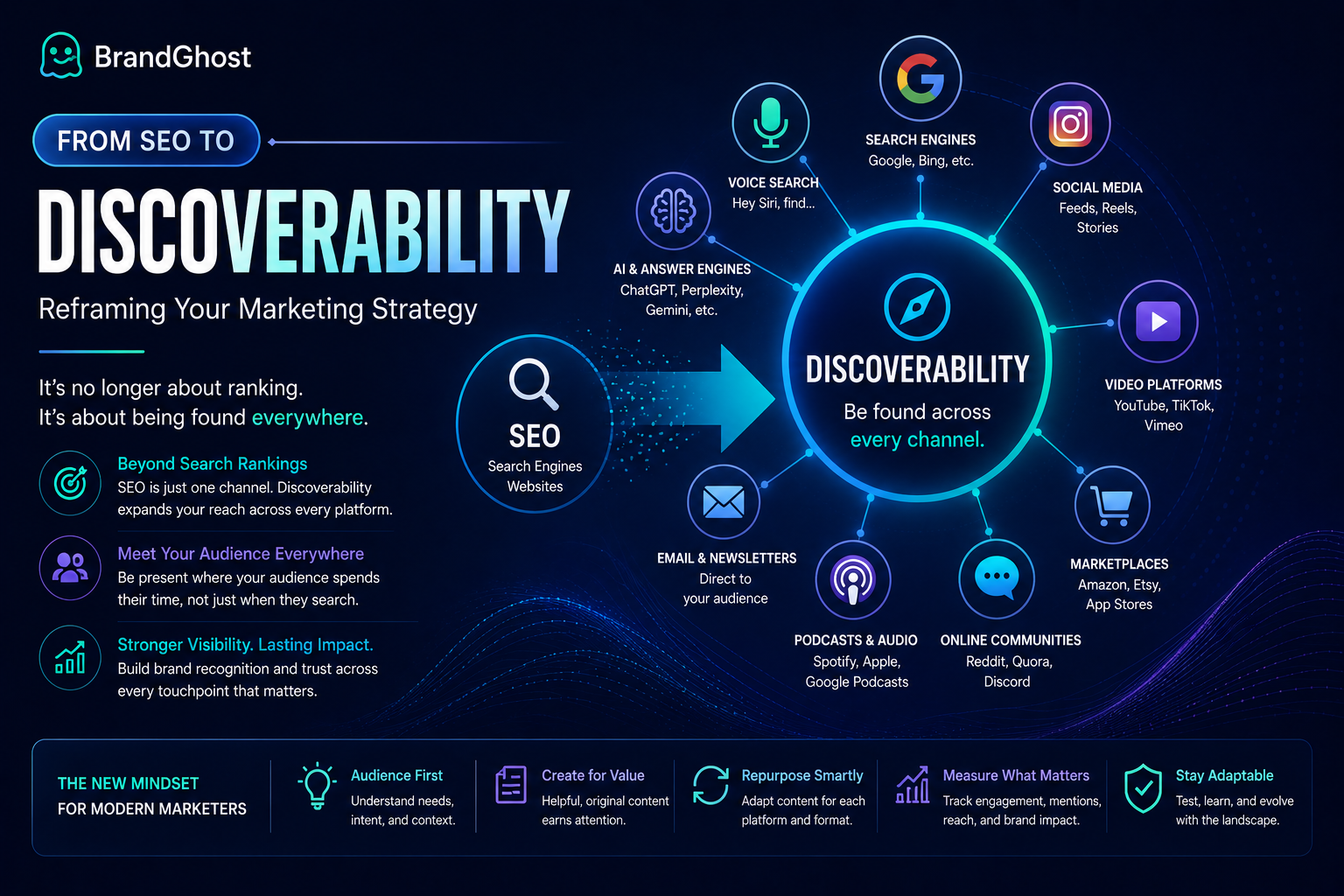
Anyone following online marketing trends today is bound to notice the growing conversation about the shift from traditional SEO to a more holistic approach—something many now call “discoverability.” The movement from seo to discoverability is rapidly shaping marketing conversations. This isn’t just another buzzword. If you’ve been relying on classic SEO tactics, you may have already sensed that the digital ecosystem is evolving: it’s no longer enough to simply be searchable. Real success rests on being genuinely discoverable across a wider spectrum of platforms, audiences, and moments.
The difference between “searchable” and “discoverable” might sound subtle, but it can have a profound effect on how brands engage with audiences. Being searchable usually means your website pops up when someone types in the right keyword. But discoverability means your content, brand, or message appears organically—sometimes unexpectedly—where audiences spend time, from social media feeds to voice assistants and digital marketplaces. For marketers, this shift prompts a fundamental rethinking of strategy: instead of focusing only on ranking in search results, it’s about maximizing the chances of your audience finding you wherever they are.
A marketing strategy shift from SEO to discoverability is particularly relevant as digital habits diversify and technology broadens what we even consider a “search result.” Social algorithms curate feeds, podcasts introduce brands through conversation, and influencer shout-outs can boost awareness more than a top-ranking article. Many marketers find that being present in these diverse spaces is crucial, yet it requires new skills, tools, and mindsets.
So why is this so important? Ultimately, the way we discover content online has become as much about serendipity as intention. As algorithms and consumer behaviors shift, digital discoverability offers the flexibility and resilience that old-school SEO alone can’t guarantee. In the coming sections, we’ll unpack why marketers everywhere are reconsidering their approach—and what it could mean for your brand’s future visibility.
Understanding SEO: Foundations and Limitations
For most marketers, traditional SEO stands as the cornerstone of any digital marketing strategy. When we talk about SEO, we’re referring to a collection of tried-and-true practices—optimizing website content for keywords, refining meta tags, building links, and delivering a smooth user experience. Many people have found real success with these methods, watching their sites climb search engine rankings and enjoying steady traffic. In many cases, the basics of SEO are almost universal—clear site navigation, quality content, and mobile responsiveness are accepted essentials by nearly every reputable guide or expert in the field.
But as the web continues to evolve, longtime practitioners sometimes notice the cracks in the old foundation. One of the strengths of SEO is how rules-based it can be; you know where you stand if you follow search engine guidelines and track algorithm updates. However, treating SEO as a checklist can lead to overlooked opportunities—like brand storytelling or cross-channel engagement. It often focuses too heavily on “what Google wants” instead of “what audiences are doing.”
Another limitation many brands encounter is how easily competitors can copy standard SEO tactics. If everyone is optimizing for the same terms and using similar tools, it becomes difficult to differentiate. And as search behavior fragments—thanks to the rise of platforms like TikTok, Instagram, or even voice assistants—simply being optimized for Google doesn’t secure all possible paths to your audience.
So while classic SEO techniques still offer value, the landscape now demands greater agility and a broader, more creative vision for how people actually discover content and brands in their everyday lives.
What is Digital Discoverability?
You may have noticed the term “digital discoverability” popping up more and more in marketing conversations—and for good reason. While SEO helps your content get found when people are actively searching, digital discoverability is broader: it’s about making your brand, content, or products surface naturally across a whole range of digital spaces, even when people aren’t explicitly searching for you. Many marketers view this as a shift from competing in a single search box to engaging audiences wherever they spend their time online.
Digital discoverability extends well beyond search engines. You’ll often see brands focusing on diverse channels like social media, online communities, video platforms, podcasts, shopping marketplaces, and even voice-activated assistants. In most cases, audiences stumble upon brands passively—maybe while scrolling TikTok, listening to a podcast, or browsing recommended products on Amazon. In these moments, the design and placement of content, or simply the serendipity of encountering it in the right context, becomes as important as any keyword strategy.
A key difference lies in how these channels operate. Unlike search engine optimization, which is highly structured and rules-driven, digital discoverability is about blending relevance with resonance. For example, a piece of content optimized for TikTok may prioritize authenticity and trending audio clips, whereas reach on Google depends on matching search intent. Discoverability, in this sense, means thinking deeply about where your audience gathers and tailoring your approach for each space.
Brands increasingly see discoverability as essential for growth. If you’re only visible where your audience is actively looking, you miss out on those casual or serendipitous moments—the ones most likely to build brand affinity and spark curiosity. In a world where attention is fractured across platforms, discoverability gives you a fighting chance to be noticed and remembered, not just found when someone already knows your name or product.
The Marketing Strategy Shift: From SEO to Discoverability
Marketers everywhere are feeling the winds of change and recognizing that a marketing strategy shift from SEO to discoverability isn’t just a passing trend but a necessary evolution. Across the industry, teams are no longer satisfied with simply getting a page ranked—they want their message to reach audiences wherever and whenever inspiration might strike. This means broadening focus from precise keywords and meta tags to thoughtfully planned content ecosystems, engaging storytelling, and cross-platform presence.
So, what is driving this strategy transformation? For one, consumer behavior has changed dramatically. People now discover content through social algorithms, influencer shoutouts, podcast features, and personalized recommendations. Algorithms across platforms like TikTok, Instagram, and YouTube are designed not just to answer questions but to entertain, inspire, and introduce new things to users—often before they even realize what they’re seeking. In other words, discovery is happening away from traditional search results, and brands that don’t adapt risk being left behind.
Algorithm evolution is another key driver. Search engines and social platforms are constantly tweaking their ranking systems, making yesterday’s tactics less effective today. Marketers embracing discoverability recognize the value in agile experimentation: testing new formats, tapping into emerging channels, and keeping a pulse on where audiences gather. For example, where brands once concentrated efforts on Google’s blue links, now they’re crafting viral TikToks, collaborating with niche podcast hosts, or ensuring their products can be found via voice-activated assistants.
You may see some brands as early adopters—those who have made “search strategies” a multi-platform affair. They make use of user-generated content, social listening, and flexible storytelling, finding success through being present in more places than search engines alone. This modern approach is not about abandoning SEO, but weaving it into a larger framework, one that meets audiences on their terms and captures attention at every step of the digital journey.
Search Strategies for the Modern Web
Modern search is much more complex than it used to be, and anyone embracing the transition from seo to discoverability quickly learns that new types of search go far beyond typing words into a box. Voice search is becoming second nature, especially as smart speakers and mobile assistants keep growing in popularity. Visual search lets people upload or snap photos and find products or inspirations instantly on platforms like Pinterest or Google Lens. Contextual search, powered by AI, tailors results to a person’s environment, device, and personal history, bringing ultra-personalized recommendations within easy reach.
This growing variety means discoverability tactics have to adapt. Many brands now experiment with optimizing images for visual search, structuring content for voice queries, or refining their presence on platforms where context determines what shows up next. Instead of focusing on one set of rules, a flexible mindset works best—testing and fine-tuning strategies to meet different search intents across multiple channels.
You may encounter challenges as the web grows more intricate, but in most cases, expanding beyond classic SEO methods opens up whole new audiences. The modern web presents both complexity and opportunity, rewarding those who are willing to think creatively about how, and where, people search today.
Content Alignment in the Shift from SEO to Discoverability
If you’re beginning to embrace the seo to discoverability mindset, you’ll quickly discover that simply reusing the same content across platforms rarely yields the best results. Content alignment is a critical piece of the puzzle: it means adjusting your content to suit the unique style, preferences, and features of each platform your brand engages on. Brands that invest in thoughtful content alignment are the ones whose messages really stand out—because they speak to their audience in the right voice, in the right place, at the right time.
Many marketers notice that a blog post written for a company website often won’t resonate in the same way as a short, visually driven Instagram Story or a candid TikTok video. To boost digital discoverability, you might find yourself reworking messaging to sound more conversational for social platforms, or slicing longer videos into bite-sized highlights for channels like YouTube Shorts or Reels. What works well on Amazon or an e-commerce marketplace—where specifics and trust are king—might flop on platforms where entertainment and trends are essential.
A common approach to aligning content for discoverability is following a few basic frameworks:
- Identify where your audience spends time: Map out priority platforms based on where your audience already gathers.
- Tailor your voice and format: Adjust your language, visuals, and post structure to match platform norms—think professional and detailed for LinkedIn, informal and playful for TikTok.
- Use platform-specific features: Stories, polls, live sessions, and carousels give native engagement opportunities you shouldn’t ignore.
- Prioritize quality over quantity: One well-adapted post on each channel is typically more impactful than a mass of generic shares.
- Review and iterate: Analyze engagement and adjust your content as you learn what resonates.
Many marketers lean on resources like the Content Marketing Institute’s guides to content strategy for more detailed frameworks and evolving best practices. In the end, content alignment doesn’t just help with discoverability; it often sparks stronger relationships and brand loyalty by meeting audiences in genuinely relevant ways.
Brand Communication in the Age of Discoverability
Once you start thinking past basic SEO, it becomes clear that brand communication is a pillar of digital discoverability. Having the right keywords or ranking high in search isn’t enough—what often matters as much is how your brand sounds, what it chooses to share, and how consistently it behaves across all touchpoints. Many brands now see that an authentic, cohesive voice can spark interest long before anyone enters a query in a search bar.
Typically, brands that communicate with clarity and integrity become more memorable, fostering deeper engagement. Audiences naturally gravitate toward companies whose messaging feels genuinely human—not scripted or rigidly “on brand.” Genuine stories, behind-the-scenes glimpses, and even moments of vulnerability help communities form emotional connections, which in turn fuels discoverability as people mention, share, and advocate for brands they trust.
Some common best practices for brand communication in this more social, discovery-driven era include:
- Keeping your tone and visual style unified across channels, while leaving room for context-appropriate adaptation
- Engaging sincerely with followers—responding to questions, comments, and even criticism in ways that show empathy
- Sharing and celebrating user-generated content to highlight customer stories
If you’re interested in data-driven perspectives on trust and authenticity, the annual Trust Barometer research from Edelman offers valuable insights, and recent trend reports from Sprout Social and Hootsuite explore just how much brand communication impacts both discoverability and long-term loyalty. Most marketers find that when their brand voice is steady and authentic, their digital presence becomes harder to ignore—on search, social, and everywhere in between.
Measuring Success: Metrics Beyond Traditional SEO
Shifting from a purely SEO outlook to a focus on discoverability naturally changes how marketers gauge their results. Instead of zeroing in only on keyword rankings and search-driven visits, many brands now consider metrics like brand mentions, share of voice, audience engagement, and overall reach across platforms. These discovery-oriented metrics offer a truer picture of how well a brand is being seen and talked about in the digital world.
You may find yourself tracking how many times your brand name appears in social posts or monitoring conversations about your products in forums or on video platforms. Analytics tools such as Brandwatch and Google Analytics are often used to piece together insights from across the digital landscape. Ultimately, while no single metric will tell the whole story, watching how your brand presence grows and resonates outside of traditional search rankings is what defines success in the age of discoverability.
Conclusion: The Future of Search and Brand Visibility
SEO to discoverability is reshaping digital presence. Adapting, learning, and trying new strategies help marketers grow as search behaviors change.
Frequently Asked Questions
What does it mean to move from SEO to discoverability?
Moving from SEO to discoverability means broadening your focus from ranking web pages on search engines to making your brand and content surface naturally everywhere audiences spend time -- social feeds, podcasts, marketplaces, voice assistants, and AI answer engines. It treats SEO as one part of a wider visibility strategy rather than the whole strategy.
What is the difference between searchable and discoverable?
Being searchable means your site appears when someone types the right keyword into a search engine. Being discoverable means your content, brand, or message also appears organically -- often unexpectedly -- where audiences already are, from social feeds to voice assistants and recommended products.
Does discoverability replace SEO?
No. Discoverability does not abandon SEO; it weaves SEO into a larger framework. Search engines remain an important channel, but discoverability adds social, video, voice, visual, and AI-driven surfaces so you can reach audiences who are not actively searching for you.
Which channels matter most for discoverability?
It depends on where your audience gathers, but common channels include social platforms, video, podcasts, online communities, shopping marketplaces, and voice or visual search. The key is mapping your audience's habits and tailoring content to each platform's format and norms rather than reusing one asset everywhere.
How do you measure discoverability compared with SEO?
Instead of focusing only on keyword rankings and search traffic, discoverability uses cross-channel metrics: brand mentions, share of voice, audience engagement, and overall reach across platforms. These signals show how visible and talked-about a brand is beyond traditional search.