Social Media Posting Schedule Guide: Frequency and Timing Strategy
Master your social media posting schedule with optimal frequency and timing for each platform. Data-backed strategies to maximize reach and engagement.
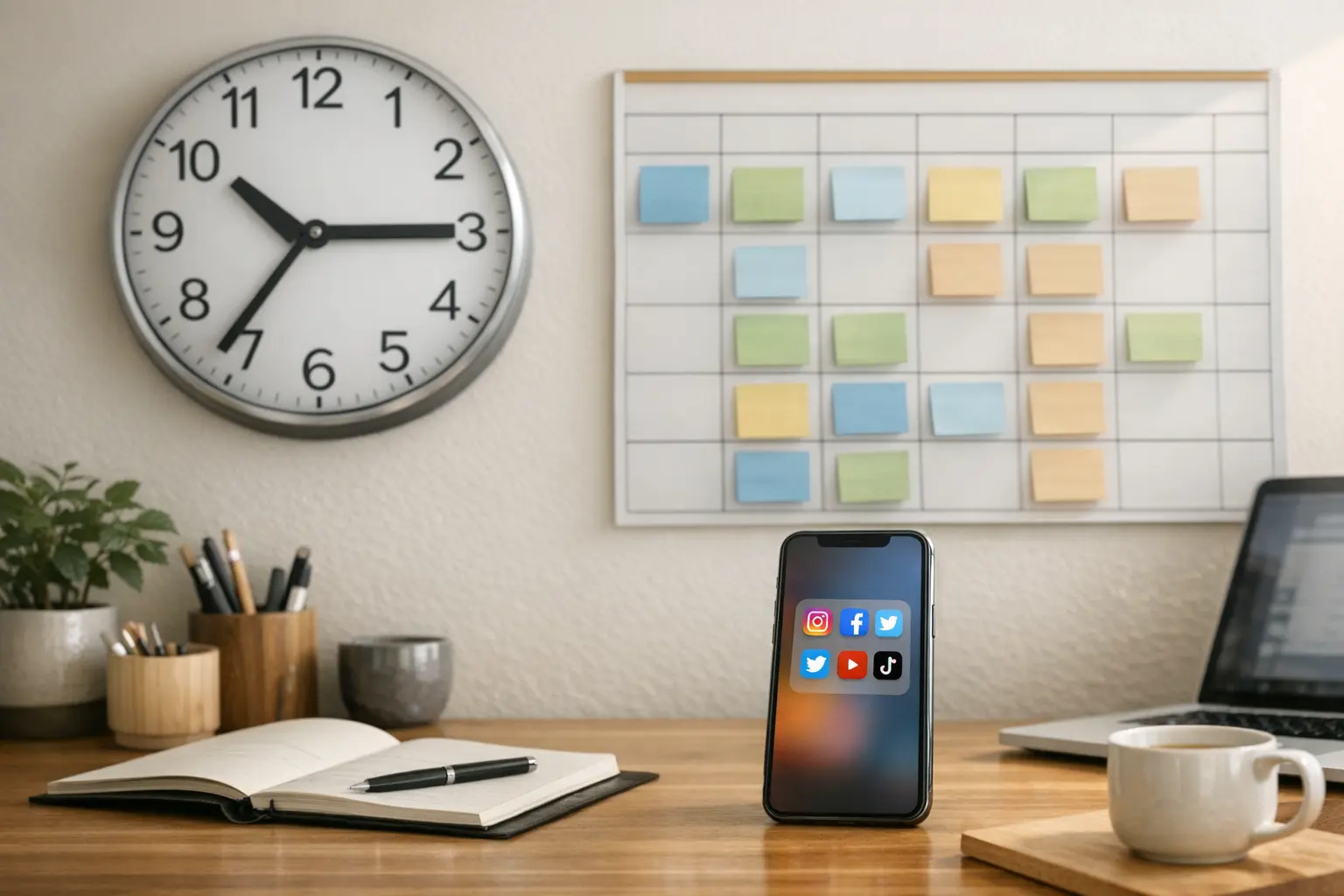
A social media posting schedule defines when and how often you publish on each platform. Instead of posting randomly whenever you have time, you establish a consistent rhythm that maximizes visibility without overwhelming your audience or burning yourself out.
Getting your posting schedule right improves reach (algorithms favor consistency), engagement (you’re posting when your audience is active), and sustainability (you’re not creating content 24/7 to keep up).
This guide covers optimal posting frequency for each major platform, the best times to post based on data, and how to build a sustainable social media posting schedule that actually works for your workflow.
Why Posting Schedule Matters
Algorithms Reward Consistency
Most social platforms prioritize active, consistent accounts. If you post daily for a month then disappear for two weeks, your reach drops.
Algorithms track posting patterns. Consistent schedules signal that you’re a reliable content creator worth showing to more people.
Inconsistent posting = inconsistent reach. Even if your content quality is high, sporadic schedules hurt distribution.
Your Audience Expects Regularity
When you post consistently, your audience knows when to expect content. That builds habits.
If you post Monday, Wednesday, and Friday at 9am, followers start checking for your content at those times. Miss a scheduled post, and they notice.
Regularity builds trust. Sporadic posting feels unprofessional or suggests you’ve abandoned the account.
Prevents Burnout
Posting without a schedule leads to reactive behavior—you scramble daily to create content, which burns you out fast.
A schedule creates structure. You know exactly what you need to create and when, which allows for content batching and monthly planning.
You’re not making daily decisions about when to post. You made that decision once, and now you execute.
Maximizes Reach
Posting when your audience is online increases immediate engagement, which signals to algorithms that your content is valuable.
Random posting times miss your audience. A 3am post might get zero engagement simply because no one was awake, which tanks your reach for future posts.
Optimal timing amplifies good content. It doesn’t fix bad content, but it ensures your best work gets seen.
Optimal Posting Frequency by Platform
Your social media posting schedule should vary by platform based on algorithm behavior and audience expectations. Here’s what the data shows:
Instagram: 3-7x Per Week
Minimum: 3 posts per week (feed) + daily Stories
Optimal: 5-7 posts per week (feed) + daily Stories + 2-4 Reels per week
Instagram rewards frequency without punishing high volume. You can post daily without saturating your audience.
Best practices:
- Mix feed posts, Reels, and Stories (don’t post only one format)
- Post Reels separately from feed photos (they perform differently)
- Use Stories daily for engagement without cluttering the feed
Instagram’s algorithm prioritizes recency and engagement velocity. Posting regularly keeps you in followers’ feeds.
Tools like BrandGhost make cross-format scheduling easy—you can schedule feed posts, Reels, and carousels from one interface without juggling native apps.
TikTok: 3-7x Per Week (or Daily)
Minimum: 3-4 posts per week
Optimal: Daily (1-3 videos per day if possible)
TikTok’s algorithm is content-focused, not follower-focused. High posting frequency gives you more chances to go viral.
Many successful TikTok creators post multiple times daily because each video is a separate chance to reach new audiences through the For You Page.
Best practices:
- Post at least once daily for maximum algorithm favor
- Test different times—TikTok’s audience is global
- Don’t sacrifice quality for volume (bad content still flops)
If daily posting feels overwhelming, aim for 3-4 high-quality videos per week. Consistency matters more than volume.
Twitter: 3-10x Per Week
Minimum: 3-5 tweets per week
Optimal: 1-3 tweets per day
Twitter rewards high frequency. The feed moves fast, so your tweets have short lifespans.
Unlike Instagram (where posts stay visible for days), Twitter content disappears within hours unless it goes viral.
Best practices:
- Post multiple times daily if you can sustain it
- Engage with replies (Twitter values conversations, not just broadcasts)
- Use threads for longer-form content (better engagement than single tweets)
- Don’t over-post (15+ tweets daily feels spammy unless you’re a news source)
Twitter is the one platform where high volume can work—10+ tweets per day is acceptable for some accounts. Test what your audience tolerates.
LinkedIn: 2-5x Per Week
Minimum: 2 posts per week
Optimal: 3-5 posts per week
LinkedIn’s professional audience expects quality over quantity. Daily posting can feel like spam.
Posts have longer lifespans on LinkedIn than Twitter—a good post gets engagement for 2-3 days.
Best practices:
- Post during work hours (not evenings or weekends)
- Focus on educational or thought-leadership content
- Avoid overly promotional posts (LinkedIn audiences skip hard sells)
- Engage with comments (LinkedIn’s algorithm rewards conversation)
LinkedIn is less about volume, more about value. Two exceptional posts per week outperform five mediocre ones.
Facebook: 1-2x Per Day
Minimum: 3 posts per week
Optimal: 1-2 posts per day
Facebook’s organic reach has declined significantly, but consistency still matters for accounts that have built audiences.
Best practices:
- Post when your audience is most active (check Facebook Insights)
- Use video content (higher reach than text or image posts)
- Focus on engagement bait (questions, polls, shareable content)
- Don’t post the same content as Instagram (customize for each platform)
If Facebook isn’t your primary platform, maintain a presence with 3-5 posts per week rather than daily.
Pinterest: 5-10x Per Week
Minimum: 3 pins per week
Optimal: 5-10 pins per week (or daily)
Pinterest is a search engine, not a social network. Consistent pinning keeps your content in circulation.
Best practices:
- Pin to relevant boards (don’t just dump pins randomly)
- Create original pins + re-pin others’ content (balance is key)
- Use keywords in pin descriptions (Pinterest is SEO-driven)
- Don’t spam (20+ pins per day looks like a bot)
Pinterest rewards regularity. Pinning 5-10 times per week consistently outperforms pinning 50 times one week then nothing for a month.
Best Times to Post (Data-Backed)
Optimal posting times vary by platform, audience, and industry. These are general benchmarks—test and adjust based on your analytics.
Best overall: Tuesday-Friday, 9am-1pm
Peak engagement: Wednesday at 11am
Avoid posting late at night (low engagement) or weekends (higher competition).
TikTok
Best overall: Tuesday-Thursday, 7-9am or 7-9pm
Peak engagement: Tuesday at 9am, Thursday at 7pm
TikTok’s audience is global, so “best times” vary widely. Test different times to find when your specific audience is active.
Best overall: Monday-Friday, 9am-12pm
Peak engagement: Wednesday at 9am
Twitter activity mirrors work hours. Posting early morning (before 9am) or lunch hours (12-1pm) catches people checking feeds during downtime.
Best overall: Tuesday-Thursday, 7-9am or 5-6pm
Peak engagement: Wednesday at 8am
LinkedIn’s professional audience checks during commutes (morning) and end-of-day wind-down (late afternoon). Avoid weekends entirely.
Best overall: Monday, Wednesday, Friday, 9am-3pm
Peak engagement: Wednesday at 11am
Facebook’s audience skews older and checks feeds throughout the day, but morning posts perform best.
Best overall: Saturday-Sunday, 8-11pm
Peak engagement: Saturday at 9pm
Pinterest is evening browsing behavior—people plan future projects on weekends. Post consistently throughout the week, but prioritize weekend scheduling.
How to Build Your Posting Schedule
Creating an effective social media posting schedule requires balancing data-driven insights with realistic capacity. Here’s how to build a schedule you’ll actually stick to:
Step 1: Check Your Analytics
Before setting a schedule, check when your audience is actually online.
- Instagram: Insights → Audience → Most Active Times
- Twitter: Analytics → Audience Insights → Active Times
- LinkedIn: Analytics → Visitors → Demographics (shows time zones)
- Facebook: Insights → Posts → When Your Fans Are Online
- TikTok: Analytics → Followers → Follower Activity
Use your data, not generic benchmarks. Your audience might behave differently than industry averages.
Step 2: Start Conservative
Don’t commit to daily posting across five platforms if you’ve been posting twice a week.
Start with sustainable frequency:
- Pick 2-3 primary platforms
- Commit to 3-5 posts per week per platform
- Schedule for 4 weeks
- Assess whether it’s sustainable
You can always increase frequency. Decreasing after over-committing damages credibility.
Step 3: Create a Weekly Template
Map out your posting schedule for a typical week.
Example:
| Day | |||
|---|---|---|---|
| Mon | 9am (Feed) | 9am, 1pm | 8am |
| Tue | 10am (Reel) | 9am, 3pm | - |
| Wed | 9am (Feed) | 9am, 12pm, 5pm | 8am |
| Thu | 11am (Reel) | 9am, 2pm | - |
| Fri | 9am (Feed) | 9am, 1pm | 8am |
| Sat | 10am (Story only) | - | - |
| Sun | 10am (Story only) | 12pm | - |
This template becomes your default schedule. You fill it with content during monthly planning sessions. Having a consistent social media posting schedule template eliminates decision fatigue and ensures you maintain regular presence across all platforms.
Step 4: Use Scheduling Tools
Manual posting at specific times is unsustainable. Use tools to automate publishing.
BrandGhost: Schedule across all platforms from one interface. Set your weekly template, and BrandGhost publishes automatically.
Buffer: Simple queue-based scheduling. You set times, add posts to the queue, and it publishes automatically.
Hootsuite: Enterprise-level scheduling with team workflows and approvals.
Scheduling tools ensure consistency even when you’re busy, traveling, or taking breaks.
Our comparison of scheduling tools helps you choose the right one for your workflow.
Step 5: Build in Flexibility
Don’t schedule 100% of your posts weeks in advance. Leave room for:
- Reactive content (trending topics)
- Real-time engagement opportunities
- News or announcements
- Spontaneous ideas
A good rule: Schedule 70-80% of posts in advance, keep 20-30% flexible for timely content.
Rigid scheduling kills creativity. Flexible scheduling creates structure without stifling spontaneity.
Common Posting Schedule Mistakes
Building an effective social media posting schedule requires avoiding common pitfalls that derail consistency and growth. Here’s what trips up most creators:
Mistake 1: Posting Too Much Too Fast
Many creators start with ambitious schedules (daily posts across five platforms), burn out within two weeks, and quit.
Start small. Post 3x per week consistently for a month. Once that feels easy, increase to 4-5x per week.
Gradual growth is sustainable. Aggressive schedules lead to burnout and inconsistency—which is worse than starting conservatively.
Mistake 2: Ignoring Platform Differences
Instagram, Twitter, LinkedIn, TikTok, and Facebook all have different optimal posting frequencies and times.
Posting the same schedule across all platforms ignores these differences. Twitter can handle multiple daily posts; LinkedIn can’t.
Customize your schedule by platform based on audience behavior and algorithm preferences.
Mistake 3: Copy-Pasting Across Platforms
Posting identical content at the same time on every platform feels robotic.
Each platform has different audiences, expectations, and formats. Customize content for each.
BrandGhost’s cross-posting features help—you create once, but it automatically adapts format, character limits, and hashtag placement for each platform. You’re not copy-pasting; you’re intelligently repurposing.
Mistake 4: Not Tracking Performance
Set a schedule, then check whether it’s working.
After 30 days, review:
- Which posting times got the most engagement?
- Which days performed best?
- Is your current frequency sustainable?
Adjust based on data. Don’t stick with a schedule just because you set it—optimize as you learn.
Mistake 5: Over-Optimizing Before You Have Data
Some creators spend weeks researching “perfect” posting times before publishing their first post.
Start with educated guesses (use benchmarks from this guide), post consistently for 30 days, then optimize based on your specific data.
Perfection is the enemy of consistency. Post regularly, gather data, refine.
How BrandGhost Simplifies Posting Schedules
BrandGhost was designed to make scheduling simple:
1. Set your weekly posting template (Monday 9am, Wednesday 11am, Friday 10am, etc.)
2. Fill your content queue by pulling from Topic Streams (organized by content pillar)
3. Schedule across all platforms at once—BrandGhost adapts content automatically for each network’s format requirements
4. Publish automatically without logging into each platform manually
You’re not juggling five different native apps or tools. One interface handles everything.
Recurring content features also help—set up evergreen posts to automatically reschedule after publishing, which fills gaps in your calendar without creating new content every time.
BrandGhost’s unified feed shows all scheduled content across all platforms in one calendar view, so you never double-post or accidentally skip a platform.
Building Sustainable Posting Schedules
The best social media posting schedule is one you can maintain long-term.
It doesn’t matter if optimal frequency is 10 posts per week if you can only sustain 5. Consistency beats volume every time.
Start conservative:
- Choose 2-3 primary platforms
- Commit to 3-5 posts per week per platform
- Schedule for the times your audience is most active
- Use tools to automate publishing
- Review and adjust monthly
As you build systems (content batching, monthly planning, content pillars), you can gradually increase frequency without burning out.
The goal isn’t to post as much as possible. The goal is to post consistently, at optimal times, with quality content that serves your audience.
If you’re ready to build a posting schedule that actually works, try BrandGhost for free. Set your schedule once, fill your content queue, and let the tool handle consistent publishing across all platforms—no manual posting required.
Frequently Asked Questions
How often should I post on social media?
It depends on the platform. Instagram: 3-7x per week. TikTok: Daily or 3-7x per week.
What is the best time to post on social media?
General benchmarks: Instagram (Tue-Fri, 9am-1pm), TikTok (Tue-Thu, 7-9am or 7-9pm), Twitter (Mon-Fri, 9am-12pm), LinkedIn (Tue-Thu, 7-9am or 5-6pm), Facebook (Mon/Wed/Fri, 9am-3pm), Pinterest (Sat-Sun, 8-11pm). However, your specific audience might differ. Check platform analytics for when YOUR followers are most active.
Should I post at the same time every day?
Consistency helps but exact timing isn't critical. Having a general schedule (e.g., mornings on weekdays, evenings on weekends) builds audience expectations without requiring exact-minute posting. Scheduling tools like BrandGhost automate this—you set preferred times, and posts publish automatically.
Can I post too much on social media?
Yes, but it depends on the platform. TikTok and Twitter can handle high volume (multiple posts daily). Instagram and LinkedIn prefer quality over quantity (daily Instagram posts are fine, but 5+ LinkedIn posts daily feels spammy).
How do I stay consistent with my posting schedule?
Use a scheduling tool (BrandGhost, Buffer, Hootsuite) to automate publishing. Plan content in batches (monthly or weekly) so you're not creating daily. Use content pillars to organize ideas so you're never starting from a blank page.
Should I post the same content on all platforms?
No, customize for each platform. While the core message can be the same, format, tone, length, and presentation should differ. Instagram needs visuals and short captions.
What if I miss a scheduled post?
Don't panic. Missing one post won't destroy your reach. Post as soon as you can, then resume your regular schedule.