AI Influence on SEO: Why AI Is Changing the Rules of SEO
The AI influence on SEO is rewriting the rules. Learn how AI search, RankBrain, and BERT changed rankings and what modern SEO strategy now demands.
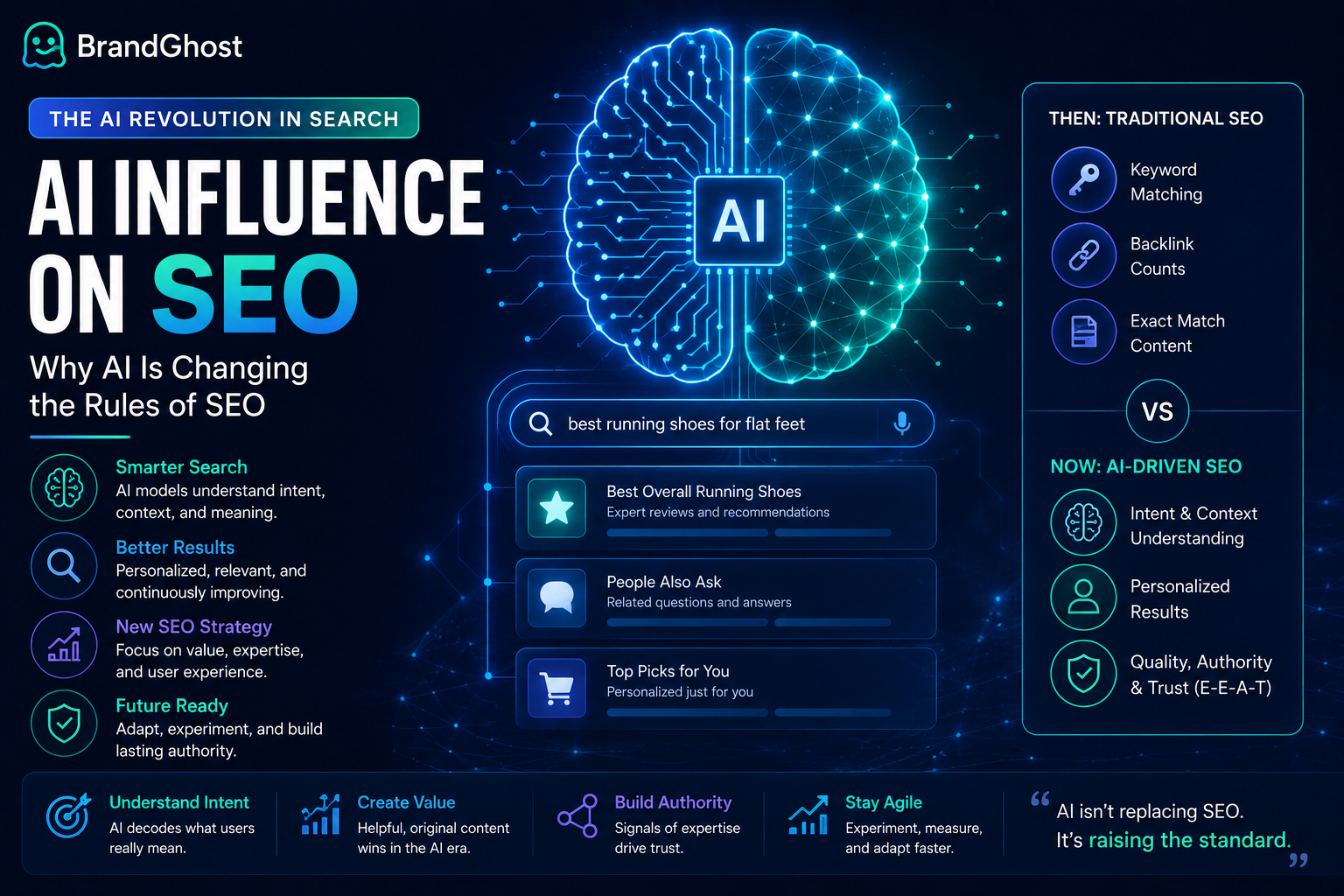
If you keep a close eye on the world of search engines or digital marketing, you’ve likely noticed a major shift taking place. The rapid progress of artificial intelligence (AI) has started to reshape the entire landscape, from how search engines understand content to the way marketers plan SEO strategies. The AI influence on SEO isn’t just a catchy phrase—it’s a reality that’s rewriting much of what was once considered tried-and-true in this field.
Many content creators and marketers find themselves reassessing familiar techniques that used to work reliably. With the emergence of AI-driven search technologies, it feels as though the rules are being rewritten every year. The importance of keeping up with Google’s latest moves, new tools, and ranking factors can seem overwhelming at times. That said, understanding these changes is increasingly urgent for anyone hoping to keep their websites visible and competitive.
Traditionally, SEO focused on keywords, backlinks, and page-level tweaks to appeal to relatively straightforward algorithms. Today, everything from natural language processing to real-time learning systems is being used by search engines to assess quality, relevance, and user intent. Marketers no longer have the luxury of relying on simple, formulaic tactics. Instead, they face a new era of digital marketing evolution, where strategies must adapt as fast as the technology itself.
This isn’t just speculation; many experts in the field point to the widespread adoption of AI by major search platforms, with constant updates that force the entire industry to evolve. It’s easy to see that AI is fundamentally altering how content is ranked, discovered, and consumed. For anyone invested in online visibility, learning why and how these changes are unfolding is critical. In the sections ahead, we’ll unpack what AI-driven SEO looks like, what makes it different from traditional approaches, and what you need to know to keep your digital presence future-ready.
What is Artificial Intelligence in the Context of SEO?
Whenever we talk about the ai influence on seo, it helps to ground the conversation in a clear definition. In the context of search engines and digital marketing, artificial intelligence refers to computer systems—like algorithms and machine learning models—that are designed to analyze, interpret, and even predict complex patterns in data. Most marketers have seen AI in action, whether they realize it or not, through features like personalized search results, automated ad targeting, and intelligent content recommendations.
A bit of history is useful here. Not so long ago, search engine algorithms operated mostly by following logical rules programmed by humans. They looked for keywords, counted links, and followed a fairly understandable set of instructions. Over the past decade, however, major search engines have steadily integrated AI technologies under the hood. Early glimpses of this shift came with Google’s RankBrain, which added machine learning to help interpret queries better. Then came updates like BERT, which further improved natural language understanding—and, more recently, AI language models similar to GPT are reshaping how search engines summarize and respond to questions. These advances reflect the broader digital marketing evolution that is happening all around us.
It’s important to note the distinction between traditional SEO algorithms and AI-driven processes. Where older systems might get tripped up by a synonym or a long-winded query, AI now helps engines grasp context, intent, and meaning, making search results far smarter and more relevant. Many marketers notice that these AI-driven changes lead to outcomes that are less predictable but often more attuned to what users actually want to find.
For those working in this space, AI’s growing role is impossible to ignore. It reaches beyond just ranking pages and spills over into content creation, optimization, and user engagement. As search engines continue refining their use of AI, the working definition of what constitutes “SEO best practice” keeps expanding as well. Understanding this evolution isn’t just helpful—it’s become essential for anyone hoping to succeed in today’s digital arena. Accessible explanations on Google’s AI advancements can often be found in official Google blogs and respected SEO industry sites.
Key Ways AI is Changing SEO Strategies
The AI Influence on SEO in Modern Practices
If you’re accustomed to the “old school” approach to search marketing, you’ll definitely notice how the ai influence on seo has prompted some of the most dramatic shifts in strategy the industry has ever seen. Where yesterday’s SEO landscape was dominated by exact-match keywords and link-building campaigns, today’s strategies revolve around understanding—and leveraging—complex, AI-driven mechanisms embedded in search engines.
Key Takeaways: How AI Influences SEO
- Search engines now use AI for contextual understanding, not just keywords and links.
- Personalization and predictive search are powered by machine learning.
- Marketers must shift from rigid checklists to strategies focused on user value and intent.
- AI-driven algorithms prioritize content quality, experience signals, and relevance.
- Human creativity and adaptability are still essential—even as AI tech advances.
A lot of seasoned marketers have observed that one of the most significant changes is in keyword strategy. With advances in semantic search and natural language processing, simply sprinkling keywords across a page is rarely enough. AI now enables search engines to better understand synonyms, context, intent, and even user location, which means pages have to deliver genuine relevance rather than just ticking boxes. The focus is really shifting toward answering real questions and providing value, rather than just gaming individual ranking factors.
Another core change is around personalization. AI lets search engines curate individualized search experiences based on past user behavior, preferences, and even the faint signals hidden in browsing habits. This personalization can sometimes feel uncanny—results appear almost as if the search engine has read your mind. Marketers are finding that their approach to content, navigation, and even product recommendations increasingly needs to anticipate not just broad topics but the specific needs of segmented audiences.
Content recommendations and predictive search also stand out as areas where the ai influence on seo is hard to miss. Many companies discover that success now means tailoring sites for intent-based targeting, rather than following a rigid list of “SEO best practices.” AI-driven engines often reward sites that deliver clear information architecture, strong internal linking, and on-page experiences that mirror how users naturally explore and learn.
Lastly, one can’t ignore the growing emphasis on user experience signals—things like dwell time, click-through rates, and engagement. In most cases, search engines are growing smarter at picking up on what real users like and rapidly updating rankings to favor those experiences.
All of these shifts are driving marketers back to the drawing board. As AI’s role in search expands, understanding its influence is essential to crafting an effective, future-facing SEO strategy. For industry analysis of these evolving strategies, see respected sources like Moz (https://moz.com/blog) or Search Engine Journal (https://www.searchenginejournal.com/).
AI Influence on SEO: Core Algorithm Updates and Search Ranking
When you talk with people who have been in the SEO world for a while, it’s easy to see how much the ai influence on seo has transformed the way sites are ranked and found. In most cases, the conversation quickly turns to the major search engine algorithm updates that have woven AI into their core processes. These algorithm changes not only shift the way search engines work—they fundamentally reshape what it means to appear in top search results.
Take, for example, Google’s RankBrain and BERT. Both updates marked a significant evolution from the company’s earlier, more linear algorithms. RankBrain introduced real-time learning capabilities, allowing Google to interpret search queries with greater nuance. BERT then pushed those boundaries further by focusing on the subtleties of natural language understanding. More recently, models like MUM (Multitask Unified Model) are being discussed as another leap, aiming to analyze and synthesize information across multiple formats and languages, all in service of better search quality.
The consequence of these AI-powered updates is that the traditional “checklist” approach to SEO often doesn’t cut it. Marketers who used to optimize for one factor at a time—be it speed, keywords, or backlinks—are now finding that relevance, depth, and context matter more than ever. These aren’t just academic changes, either; many real websites experience score swings after algorithm updates, especially those relying too heavily on old-hat tactics instead of genuinely helpful content.
Most practitioners find that adapting to these AI-driven algorithms means embracing change and rethinking content evaluation from the ground up. The ai influence on seo, especially with each new update, nudges content creators to focus more on audience needs and less on technical tricks. For technical details on recent algorithm updates, consult Google’s Search Central documentation (https://developers.google.com/search/blog), or leading SEO case studies available in Search Engine Journal (https://www.searchenginejournal.com/).
AI Impact on Content Creation and Optimization
If you spend any time on the front lines of digital marketing lately, you’re probably aware of how the ai influence on seo has spilled over into the actual content creation process. Many content teams now use AI-powered tools to suggest topics, generate outlines, or even write full drafts. While this can give a sense of futuristic possibilities, it’s also introduced a new set of challenges for those concerned with content quality and authenticity.
A common approach among marketers is to leverage AI for brainstorming or rapid first drafts, but most find that human oversight is crucial for maintaining brand voice and credibility. Generative AI makes it easier to churn out large volumes of content, yet that same efficiency sometimes risks diluting originality—or, worse, producing thin or duplicate material that search engines penalize. In the wake of these developments, best practices around content optimization have shifted. What used to be a matter of keyword density and meta tags now expands to include signals like E-E-A-T (Experience, Expertise, Authoritativeness, and Trustworthiness). Google and other major search platforms have become more explicit about these standards, with helpful content guidelines emphasizing the value of unique insights and genuine usefulness over quantity.
Many marketers find this reality a double-edged sword. On one hand, AI tools can help surface user questions, structure logical outlines, and even check for factual accuracy. On the other, an over-reliance on automated suggestions can strip out the nuance and depth that audiences (and algorithms) increasingly reward. New metrics for content quality now look at things like comprehensiveness, engagement, clarity, and user satisfaction rather than superficial optimization tricks. You may notice, for instance, higher-performing content often includes thoughtful commentary, well-cited references, and clear takeaways—hallmarks of deeper work that AI can support, but seldom replicate on its own.
For anyone participating in the digital marketing evolution, mastering these content shifts has become essential. Those who balance AI’s efficiency with human insight tend to see the greatest wins, as search engines get better at rewarding creators who put user needs and authentic expertise first. For more depth on these trends, it’s worth looking at recent discussions in Search Engine Journal and guidance in Google’s helpful content documentation.
The Evolution of Search Engine Strategy in an AI-Driven World
The ai influence on seo has forced nearly everyone in digital marketing to reconsider how they set their course. In the earlier days, marketers mostly relied on fixed tactics—picking clever keyword phrases, earning backlinks, and tweaking page attributes. These old-school strategies thrived because the algorithms themselves were fairly stable and predictable.
But as AI has taken the driver’s seat in search rankings, what it means to “optimize” has shifted in dramatic ways. Search engines equipped with machine learning can reinterpret intent, context, and nuance far more flexibly, reshaping how they analyze everything from headline structure to click behavior. Most marketers now advocate for constant learning and experimentation—that willingness to try new approaches, measure results, and adapt quickly is rapidly becoming the cornerstone of a successful search engine strategy.
Some in the field have commented that building long-term brand authority and fostering user trust appear just as vital as technical optimizations. Rather than simply ticking boxes for keyword density, many teams now focus on creating deeper, richer digital experiences. This kind of ongoing digital marketing evolution feels less like a race for quick wins and more like a marathon that rewards resourcefulness and perspective. For those keeping up, reading recent industry insights from respected sources (such as major industry publications and SEO expert collectives.) can provide valuable context as expectations shift.
What’s become clear is that being agile is a competitive advantage. As the ai influence on seo keeps rewriting the rules, success leans more on adaptability, thoughtful strategy, and an openness to new tactics—qualities that define the marketers ready for tomorrow’s challenges.
Challenges and Ethical Considerations of AI in SEO
In digital marketing circles, it comes up again and again that the ai influence on seo isn’t without its challenges. One major risk is letting AI tools become a crutch: content can start to sound repetitive, and the distinctiveness that builds trust with audiences sometimes gets lost. Marketers are also increasingly aware of questions around content authenticity and transparency—issues that AI advancement has made harder to manage.
On the ethical side, several in the field highlight concerns like bias in AI models and the ease with which misinformation might spread if there isn’t vigilant oversight. The general consensus seems to be that while AI streamlines a lot of the technical work, it’s still up to marketers and content creators to make thoughtful, responsible choices. For a deeper dive, resources like this discussion on AI content ethics capture the complexity and importance of these evolving considerations.
Frequently Asked Questions
How is AI changing SEO?
AI has shifted search engines from keyword-and-link matching toward understanding context, intent, and meaning. Modern algorithms personalize results, power predictive and voice search, and reward genuinely helpful content. As a result, SEO strategy now centers on user value and relevance rather than rigid keyword checklists.
What is the AI influence on SEO in simple terms?
The AI influence on SEO is the way artificial intelligence -- through machine learning models inside search engines -- now decides what content is relevant and trustworthy. Instead of counting keywords and links, search engines interpret what users actually mean and surface content that best answers their intent.
Did RankBrain and BERT really change SEO?
Yes. RankBrain introduced machine learning that helped Google interpret unfamiliar queries, and BERT improved natural language understanding so search could grasp context and nuance. Later models continue this trend. Together they pushed SEO away from exact-match optimization and toward depth, relevance, and clarity.
Will AI replace SEO specialists?
Not in the foreseeable future. AI automates technical and repetitive work, but human creativity, strategy, brand judgment, and editorial oversight remain essential. The marketers who thrive treat AI as a force multiplier rather than a replacement for expertise.
How should marketers adapt to AI-driven search?
Focus on real user value, original insight, and signals of experience, expertise, authoritativeness, and trust (E-E-A-T). Experiment continually, measure results, and build genuine authority rather than chasing single ranking factors. Agility and adaptability are now the core competitive advantages.